On Wednesday, the President of the European Commission, Ursula von der Leyen, told Members of the European Parliament of how “appalled” she had become by the “disinformation that threatens global progress on everything from measles to polio”.
“We need more capacity to monitor and detect information manipulation and disinformation”, she declared. Perhaps she should start with her own Health Commissioner Oliver Varhelyi.
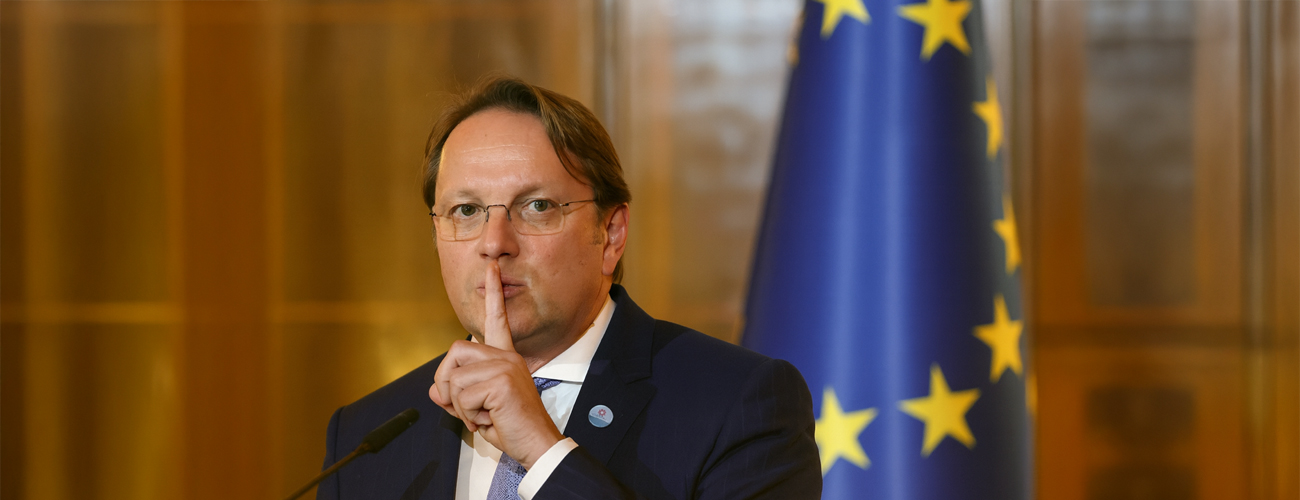
Back in May, we reported on Varhelyi’s statement that “new nicotine products” have health risks that are “comparable to smoking”. The statement sparked outrage among the scientific community, 83 of whom wrote to the Commissioner in protest.
“This position is not only a significant departure from the foundational principle of evidence-based public health but also undermines the European Commission’s vital commitments to data-driven legislation and to combating disinformation”, the experts wrote, exercising a level of diplomatic restraint in their language that this website isn’t capable of.
Lots of us wondered if the statement was just Varhelyi going off script. This is the same man who, in the wake of the 7th October attacks on Israel by Hamas, falsely announced that the EU was immediately suspending all humanitarian aid to Palestine. The Commission spent the next week walking the comments back, with its chief spokesman having to make clear on camera that “the announcement…was not preceded by consultations with any member of the College, ok? That must be absolutely clear”.
So three Members of the European Parliament thought they’d check, and asked the question formally to the Commissioner. On Wednesday, we got the answer.
In an unusually straightforward statement, Varheyli responded that the statement “is the official position of the Commission”. Answers to written questions from MEPs go through a multi-layered process of approval.
Even more odd was the leak to EurActiv from a Commission official the following day, saying that the EU’s executive is planning a study on the health impacts of vaping. A strange thing to look into when you apparently already have an official position on it. One wonders how independent any such study can truly be under the circumstances.
And then came the insight into why the Commission wants to tax safer products. In another shockingly blunt statement to the same MEPs, the EU executive says that more tax will “help to reduce their attractiveness as tobacco substitutes”.
Yep. The Commission just essentially said they don’t want smokers to switch to safer alternatives. And the prohibitionist movement cheers them on. Tabaknee, one of the more militant Dutch anti-nicotine lobbyists, are explicit in their ask: “governments should first equalize the effective tax burden on different tobacco products as much as possible…a comparable tax burden should prevent users from switching from one product to another”.
Varhelyi will face Members of the European Parliament of the Health Committee on the 25th of September.
Public health experts – the ones that actually care about what happens to smokers – are appalled. “Closing the life-saving escape route that smokers can have in nicotine pouches and e-cigarettes is a bit like closing the door to the fire escape because the steps may be slippery”, said Dr Karl Erik Lund, a senior researcher at the Norwegian Institute of Public Health.
I suppose we have to say it again: no-one seriously believes that vaping, heated tobacco and nicotine pouches are as risky as smoking. Vapes have been around 20 years now, and no-one can point to a confirmed case of anyone dying because they used a legal, regulated product. I can’t be bothered to look up how many people have died from smoking during the same period, but it’s safe to say that number is more than zero.
Nor has there ever been a case of popcorn lung caused by vaping, as the Commissioner also claimed before Parliament.
The British government, the US FDA, the French Government, the German Government, pretty much every comparative scientific paper ever written on the subject all come to the same conclusion: it’s the smoke that causes the harm, and neither vapes nor pouches produce smoke.
This is not a matter of opinion. We can debate whether harm reduction is good policy, but the relative risks of smoking, vaping and pouches are settled science. Much like the efficacy of vaccines in combating measles and polio.
“Saying outrageously erroneous things on important matters of public health does not change the science” said David Sweanor, of the Center for Health, Law, Policy and Ethics at the Uiversity of Ottowa. “But it does change public perceptions of the trustworthiness of EU authorities”.
“Seeing how distrust of health authorities has led to anti-vaccine ideologues in important positions in the United States should have been seen as a cautionary tale rather than an instruction manual”.
Derek Yach, a former WHO staffer who specialises in non-communicable diseases, was just as blunt, calling the Commission’s statement “equivalent to [US Secretary of the Department of Health and Human Services] RFK Jr’s statements about vaccine dangers”.
“Both ignore established science”, he continued. “Both will undermine the health of millions of people seeking to lower their health risks. It’s deeply concerning to see leading health authorities on both sides of the Atlantic undermining public health to support popularist demands”.
But those who claim to campaign in favour of public health, and who are often concerned by this kind of misinformation when it comes to vaccines, have said nothing. The European Public Health Alliance welcomed von der Leyen’s statement on fighting vaccine disinformation, but said nothing about the active disinformation on nicotine coming out of Oliver Varhelyi’s office. They’re too busy fighting to get back the grants Varheyli’s department has just taken away from them.
“Democracy becomes a reality only when people’s voices are heard”, they said in a statement after von der Leyen spoke on Wednesday, “…and when policymaking is grounded in participation and accountability”.
Fine, so if EPHA’s role as a part of civil society is to deliver accountability, then where’s their statement on the blatant lies coming from the Commission on safer nicotine products? And if they’re not actually going to provide accountability when a Commissioner lies about science from the panel of a Parliamentary Committee, then why should anyone fund them to do so?
Science doesn’t care whether your opinion is the darling of the public health community – like the efficacy of vaccination for polio – or the subject of its ire, like the fact that vaping and nicotine pouches are far safer than smoking. If you say you follow the science, but then flatly contradict it from a position of authority when it suits your political agenda, then you are spreading disinformation. If you do that once, then why should anyone trust you on anything else?