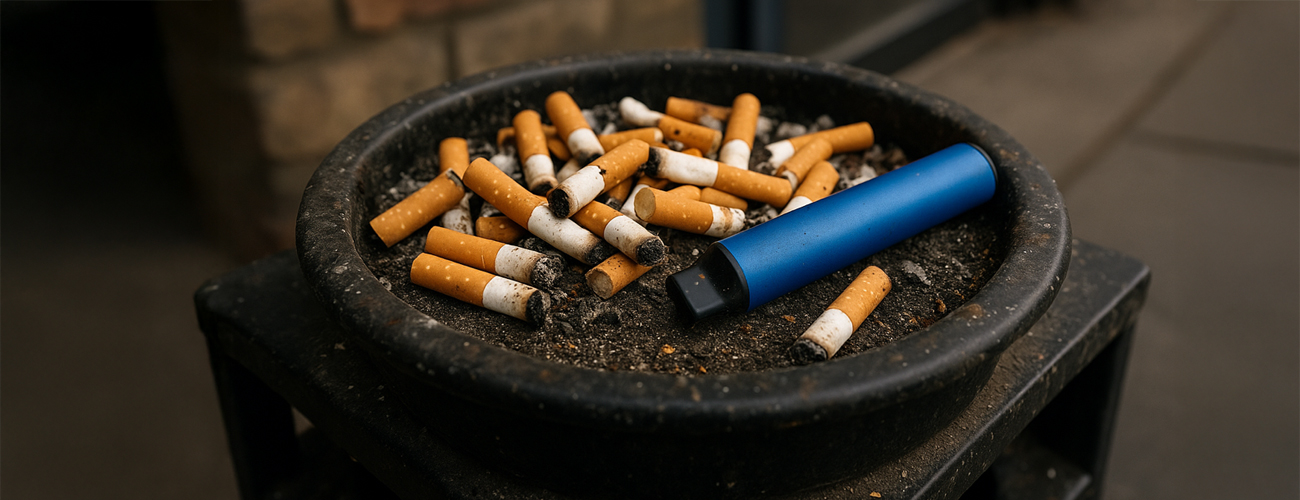

- Flavour bans led to drops in vaping among young adults and adults over 25
- Youth vape use declined faster in states with bans
- But youth and young adult smoking rates fell more slowly in those states compared to those without bans
- Researchers warn of unintended effects and call for broader strategies
Banning flavoured vapes can reduce vaping among young people, but may also slow progress in cutting cigarette smoking rates, according to a new study.
The analysis, published in JAMA Network Open, looked at how flavour bans affected smoking and vaping habits in six U.S. states that implemented restrictions between 2020 and 2021. These included Massachusetts, New York, New Jersey, Rhode Island, Maryland, and Utah.
The findings show that vape use dropped in these states, especially among 18 to 24-year-olds and adults over 25.
Smoking declined slower in states with flavour bans
But in an unexpected twist, the study also found that cigarette use among teens and young adults declined more slowly in states with flavour bans compared to those without them.
“Both e-cigarettes and combustible cigarettes are essentially a source of nicotine for people who may have nicotine dependencies,” said Dr. Douglas Levy, Director of Policy Research at the Tobacco Research and Treatment Centre at Massachusetts General Hospital.
“We’re trying to solve the problem of youth vaping, but we need to carefully consider the impacts of more harmful combustible cigarette use.”
The study tracked tobacco use from 2019 to 2023 using national surveys of high school students and adults. Researchers compared changes in tobacco use between states with flavoured vape bans and those without, using 2019 as a baseline.
Vape use among young adults aged 18 to 24 dropped by 6.7 percentage points in 2022 in states with flavour bans compared to those without. Among adults over 25, usage declined by 1.2 percentage points in 2023.
For high school-aged youth, vape use fell from 24.1 per cent in 2019 to 14.0 per cent in 2023 in states with bans—a sharper drop than in states without bans, where use declined from 24.6 per cent to 17.2 per cent over the same period.
However, the study found that more dangerous cigarette smoking did not fall as quickly in states with flavour bans. In 2021, cigarette use among youths was 1.8 percentage points higher than expected, while among young adults it was 3.7 percentage points higher than expected. These increases persisted through 2022 and 2023.
Youth may switch back to cigarettes
Researchers suggest this may be an unintended consequence, where some young people who cannot access flavoured vapes switch back to smoking traditional cigarettes.
“Flavour policies were associated with reductions in e-cigarette use and unintended increases in cigarette use,” the study concluded, “highlighting a need for future work on evaluating substitution effects and prevention of youth tobacco use.”
The impact of flavour bans also varied by state. Massachusetts showed consistent reductions in vaping across age groups, possibly because it had local bans in place before the statewide policy and stronger enforcement. Utah and Maryland allowed some exemptions, such as menthol flavours or specialty shop sales, which may have reduced the bans’ effectiveness.
The authors note that their study is observational, meaning it cannot prove cause and effect, and other factors may have influenced the results. Still, the findings provide important insight into how these policies work in practice and underscore the challenge of reducing youth nicotine use without encouraging cigarette smoking.
“Policy states exhibited lower prepolicy prevalence and attenuated postpolicy decreases,” the study said, meaning that while these states started with lower cigarette use, their smoking rates fell more slowly after bans took effect.
The researchers stress the need for comprehensive strategies that curb youth nicotine use without slowing declines in smoking. These could include broader flavour restrictions, better enforcement, and improved cessation support.
“We need to carefully consider the impacts,” Levy said, “of more harmful combustible cigarette use.”