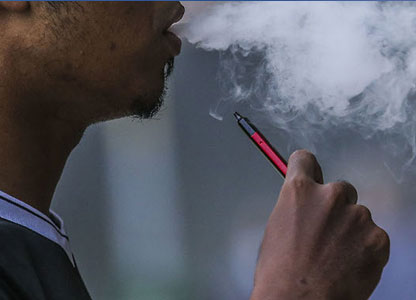
Promoting nicotine alternatives such as vapes and pouches is “imperative” for Pakistan to cut its alarmingly high smoking rates, an MP has said.
Pakistan’s Minister of State for Finance and Revenue Ali Pervaiz Malik said tobacco harm reduction (THR) policies are vital for protecting future generations from the risks of smoking and for reducing the country’s spiralling healthcare costs.
He said: “Global THR policies provide a roadmap for reducing smoking-related health burdens. Exploring such strategies is imperative for Pakistan.”
The comments mark a significant shift from Pakistan’s regulatory approach to tobacco control to date. Global health campaign group Smoke Free Sweden said: “Pakistan has yet to integrate harm reduction strategies into its tobacco control framework.
“Instead, restrictive policies on lower-risk alternatives continue to limit their accessibility, affordability and acceptance among smokers seeking to quit.”
Pakistan’s smoking crisis
Pakistan is faced with a smoking crisis, with 25.4 million adult smokers and 130,000 people dying every year from tobacco-related illnesses. It has one of the highest smoking-related death rates in South Asia at 91.1 per 100,000 people.
This far exceeds the regional average (78.1) and the global average (72.6). The economic impact is just as staggering, with smoking reportedly costing the country €2 billion every year – around 1.6 per cent of its GDP.
A new report by Smoke Free Sweden urges Pakistani lawmakers to take decisive action by adopting harm reduction measures that have proven successful in Sweden.
The landmark study, Tale of Two Nations: Pakistan vs. Sweden, presents a stark contrast between the two countries’ approaches to smoking cessation and tobacco harm reduction.
While Sweden has been declared the world’s first ‘smoke-free’ nation – defined as reducing smoking prevalence below five per cent – Pakistan’s traditional tobacco control policies have resulted in smoking rates up to four times higher than Sweden’s.
Almost a quarter of Pakistani men smoke
The study highlights that smoking prevalence among men in Pakistan remains at 22.2 per cent, more than four times higher than Sweden’s 4.9 per cent.
Report author Dr. Delon Human said: “Pakistan stands at a crossroads. Sweden has demonstrated that embracing safer nicotine alternatives – such as snus, nicotine pouches and vaping – while maintaining strong public health policies can drastically cut smoking rates and save lives.
“By contrast, Pakistan’s current regulatory trajectory risks keeping millions of smokers trapped in a cycle of preventable disease and premature death.”
Key recommendations of the report include:
- Establishing a clear regulatory framework for nicotine pouches and vaping products to ensure affordability and accessibility for adults.
- Shifting public health messaging to educate consumers and healthcare professionals on the reduced risks of smoke-free alternatives.
- Implementing tax policies that make safer nicotine products more attractive than cigarettes.
- Establishing and enforcing minimum-age restrictions on all nicotine products to prevent youth uptake.
“Pakistan can no longer afford to ignore the overwhelming global evidence on tobacco harm reduction,” Dr. Human said. “Following Sweden’s lead could prevent thousands of unnecessary deaths and create a healthier future for millions of Pakistanis.”