Belgium’s ban on disposable vapes has handed their trade to the black market, a new investigation has found.
In January, Belgium became the first European Union country to ban the sale of single-use vapes.
However, a new report by broadcaster VRT’s Pano programme has revealed the ban has backfired. Disposable vapes are increasingly popular among young people – only now, the unregulated devices are more likely to contain dangerous drugs or chemicals.
Cannabis vapes are more widely available following the ban, according to Pano. These contain tetrahydrocannabinol (THC) liquid, the most active substance in cannabis.
‘Cannabis’ vapes containing spice
But, the investigation found, a lot of these vapes in fact contain spice. This is a form of synthetic imitation cannabis that is supposed to mimic the effects of THC or natural cannabis. But unlike natural cannabis, spice is much more potent and addictive.
Responding to the programme, Belgium Health Minister Frank Vandenbroucke said: “This is a criminal industry, and those vapes need to be taken out of circulation. This criminal industry is looking for methods to get a new generation of children and young people addicted.”
The true extent to which spice vapes are being distributed in Belgium is still unclear. “But we need to consult with the police and the minister of the interior to map this out,” Mr Vandenbroucke said. “It is dreadful that nicotine and now drugs are accompanied with apple and strawberry flavours and I don’t know what else.”
Disposable vapes still circulating in schools
Pano’s report also showed that despite the ban, disposable vapes are still circulating widely in the country’s secondary schools.
“All the products discussed in the Pano report are banned,” Vandenbroucke says. “Smart vapes you can play games on, disposable vapes, vapes with all kinds of frills…. But unfortunately they are still allowed in other countries, and that is our problem.”
The online sale of vapes has been banned in Belgium since 2016. However, Vandenbroucke says it is very difficult to enforce that ban. “The problem is not Belgian legislation, but the lack of European legislation and European cooperation,” he said.
Despite evidence that the ban has backfired by fuelling a dangerous black market, Vandenbroucke continues to stand by it. He said: “It is an unhealthy and dangerous product and vapes need to be eliminated from this world”.
Flavour ban on the cards
Vandenbroucke suggested a ban on flavoured e-liquids will be next, but there is discussion over whether certain flavours such as tobacco and mint should remain legal to help smokers quit.
He said: “That is not so easy, because there is a discussion about whether you should then only offer tobacco flavours.” He said in the past, experts have advised that people who want to switch from traditional cigarettes find it harder to quit if flavours are limited.
“If you want people to switch from tobacco products, you should still have another flavour available, for example mint,” he said. “But more consideration is still needed.”
Government criticised for combining legal and illegal industries
Meanwhile, the Belgian vaping federation VapeBel has criticised the government for wrongly combining the legal and illegal vape industry in its public messaging.
While illegal products are often sold without any age restrictions or controls, legal vapes adhere to strict regulations and are intended for adult smokers aiming to quit cigarettes. “Despite this, these two markets are often wrongly conflated in public discourse,” VapeBel said.
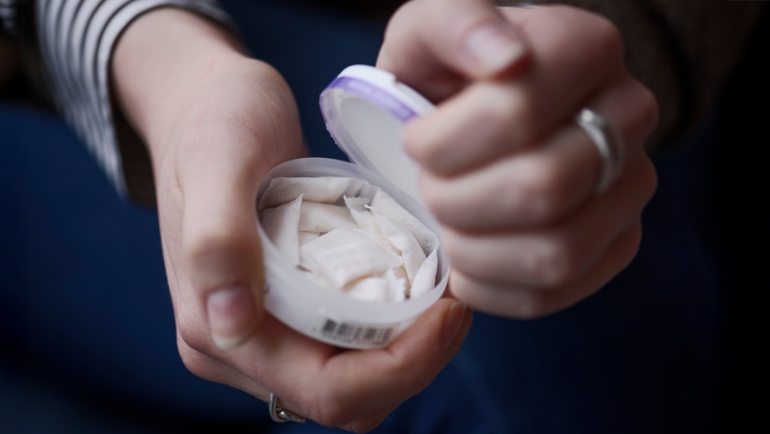
A separate report in December found that nicotine pouches are also still widely available for sale in Belgium shops despite being banned.
Government data showed that in 2024, 318 out of 1,781 retailers checked by the authorities did not comply with the ban. This resulted in 3,273 packets being seized.
“[Sellers] are very inventive in finding ways to bypass legislation,” Annelies Wynant, spokesperson for the Ministry of Health, said. “They are very creative in hiding the products: in washing machines, chip boxes, ovens, etc.,”