As we count down to the WHO’s bi-annual summit on tobacco control – which is increasingly used to spread misinformation about harm reduction, we sat down with former WHO Director for Non-Communicable Diseases Derek Yach. Derek’s had a long and fascinating career in public health, so we’ve made this a two-parter.
You started your career in the South African government as the country was transitioning from apartheid to to democracy. What was that period like?
I did medical school and student politics during the height of apartheid. So I saw my role in medicine and public health as helping to address the inequities of the past and to try and tackle the health problems of the future. Even though my employer, the SA Medical Research Council, was seen as conservative, we published a lot during that decade that eventually became important for the incoming ANC to use in their policy.
South Africa, particularly Cape Town, has had decades of being world leaders in medicine and science. The first heart transplant, the Nobel Prize for the CAT scan, all of these things came out of Cape Town. And the intellectual strength in medicine was always regarded as a gem that was not touched by the apartheid government. A lot of us within the establishment did push very hard for change. We weren’t suppressed and beaten up as the black community was, but we all carried that vision of a better South Africa.
When the apartheid government permitted the free movement of blacks into urban areas for the first time in 1986, the government asked us at the MRC “to look at how we’re going to minimize the infections that would spread from blacks coming from the rural areas to us whites in the cities” – it really was as crude as that.
But we were able to turn that into asking “how do we build an epidemiological capability that protects all people from all risks”. The government funded it and we became the Center for Epidemiological Research. That focused on everything from tuberculosis to HIV AIDS to chronic diseases to some of the best work on cardiovascular health among whites, to cancers of the oesophagus and lung and everything else. So as I said, there was a tolerance for science.
When you look at South Africa’s struggles today – unemployment, corruption, racial and wealth divides – what effect will that have on South African scientific capabilities today?
Health needs got to their lowest point when President Mbeki delayed the rollout of antiretroviral drugs at the height of the HIV/AIDS pandemic, resulting in a spiralling death rate. Mbeki was pushing back against the pharmaceutical industry and wanted to provide “traditional” remedies that simply didn’t work.
By that time I was at the World Health Organisation (WHO) but my colleagues back home – the leading epidemiologists and public health and scientists – rallied heavily against that, despite career threats and everything. And, in the end, won the day, and the largest antiretroviral treatment in the world rolled out and millions of people’s lives have been saved.
Since then, there’s been a general erosion of the country’s scientific capability, not in the infectious disease area, which I think is still world class. And through the pandemic, South Africa was one of the few countries that was able to alert the world to shifts in the strain of COVID because it had the capability on the ground unlike so many countries. And the vaccine rates are still extremely high despite the nonsense going on here in the US.
How did you then become interested in tobacco policy?
Dr Nkozasana Zuma Zuma, then wife of future president Jacob Zuma, initially worked for me at the Medical Research Council. She went on to become Mandela’s first Minister of Health put into effect very strong legislation and regulation that reversed years of government inaction on smoking. They increased the taxes above inflation every year for a decade after being inspired by David Sweanor to follow Canada’s lead. And the result of that was to moderate the smoking rate.
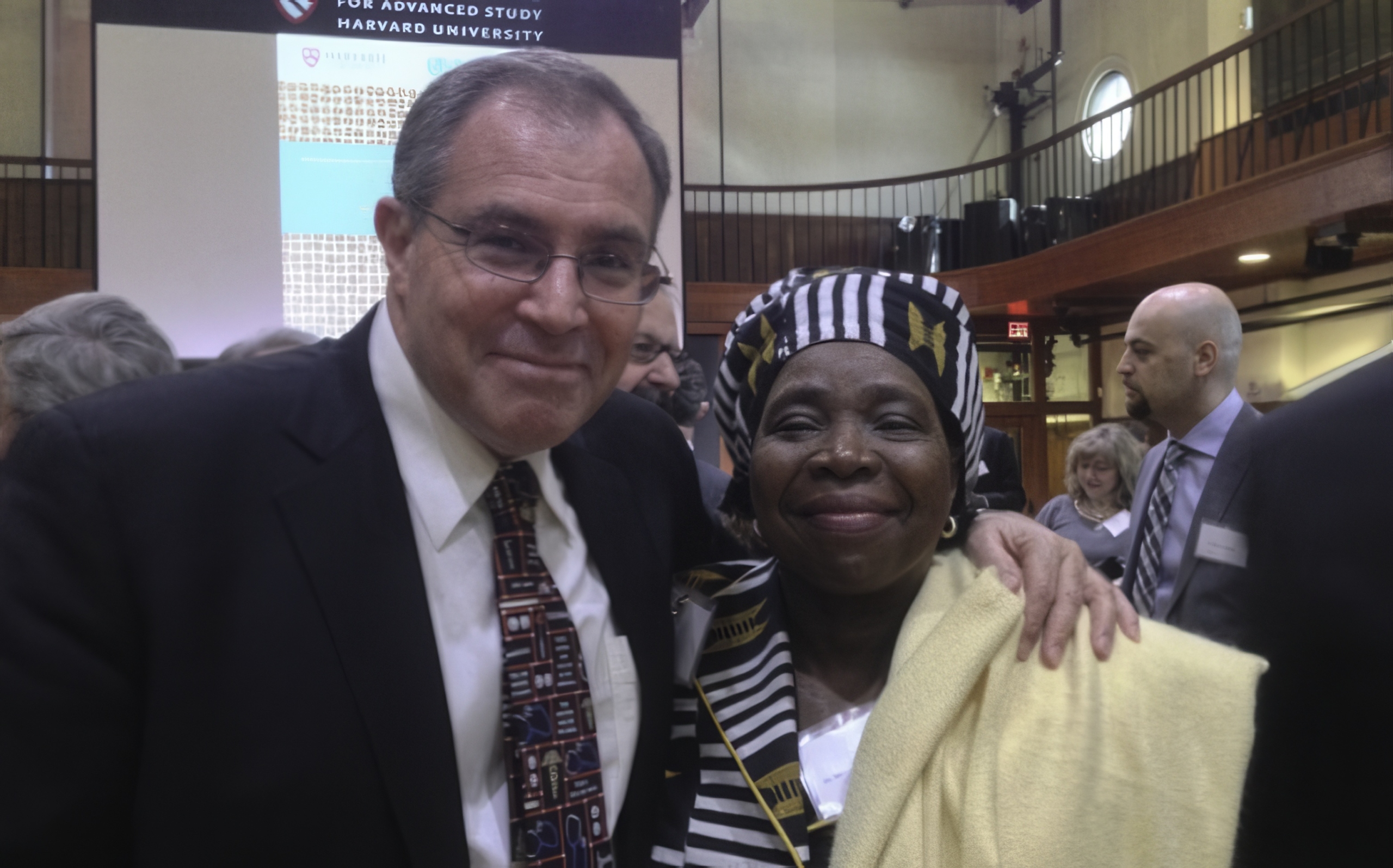
We had really focused very strongly on the way the industry, particularly BAT in South Africa and Rembrandt (a leading national tobacco company), had been extremely underhand in trying to stop legislation. I came face to face with the lobbyists when I sat in Zuma’s office as an adviser. They explained that all we needed was voluntary agreements. We didn’t need our bans on advertising and marketing. Didn’t need to raise the taxes. Everything would be fine.
That convinced me of the importance of them being demonized. And it was because of that, I think, that the African delegation became one of the most vociferous delegations to build the WHO mantra that you cannot have any negotiations with the tobacco industry.
Fast forward to today, and it almost feels like that demonization is the goal and not the public health imperatives…
I can remember sitting in a meeting in Stellenbosch in the late seventies when they showed us that the industry had the best environmental standards. It dealt with its workers very well. It had clean factories. It was paying its people very well. So what was the problem? And I said, the only problem you have is your product kills!
I had no deep ideological reason to want to do anything if the product didn’t kill. And what happened over the decades was that the product was being transformed, and we took our eye off what was happening.
I was the first South African to be invited back to WHO after apartheid and initially started my work at WHO on general policy. But as part of that general policy, we were looking at what international strategies were needed to tackle international health problems.
This was an era when globalization was emerging as a positive force for good in global health. And we recognized that we needed to do two things. One was to strengthen the international health regulation to control infectious diseases and the other was to tackle tobacco as an international threat, which we did through the Framework Convention.
At the time I asked the tobacco companies what their science was starting to tell them about harm reduction. Michael Russell was a psychiatrist trained at the University of Cape Town, who then went off to The UK and started developing the nicotine patch and gum; and made that very statement saying that if we separate nicotine from the combustion, we will reduce the harm. It’s not the nicotine that kills, it’s the smoke. And if that was the case, and we all knew it then, as he’d done the work a decade before in the late 1970s, was the industry starting to do anything new at substance?
So I convened the first and only meeting ever when we had the tobacco company scientists come to the WHO and present on what they saw the path forward was on the science. That was 1998. Unfortunately, it was too early, probably by about five or six years because they didn’t present anything particularly interesting. If we’d repeated the meeting seven or eight years later, things would have been very different.
So why didn’t anybody think of repeating the meeting?
By then, WHO was convinced that the way forward was to demonize the industry. Once you have that goal, there was no internal culture to ask the question, what was happening in the patent filings of these companies? If they had looked, they would have seen by the late 90s and early 2000s, PMI and BAT and other companies were starting to file interesting patents about reduced risk.
The timing was interesting because while all this was going on, the Doha trade talks were addressing the pricing of AIDS drugs. That was focused on how we have patent sharing to ensure that the poorest countries have access to new technology that’s gonna save the lives of AIDS patients. So in one part of WHO, we were very focused on patents and technology. And the same negotiators were almost blind to the fact that maybe this would start happening in the tobacco industry.
The words patent patent filing, innovation, advances in science don’t appear anywhere in the framework convention. We effectively sealed the science at the point of signing the treaty.
And at that very moment we were starting to see the takeoff of vape innovation. The innovation was happening, but by the time it started becoming visible, the walls had been shut and the capability to talk across them had been closed.
But if the science was sealed, how then are the pharmaceutical businesses supposed to look again at their cessation products?
There were a couple of things that made the situation even worse. The campaign for tobacco free kids was starting its “kiddification” campaign in the US, funded initially by the Robert Wood Johnson Foundation with unprecedented amounts of money focused on the issue of kids. The consequence of that meant that the potential benefit of harm reduction for people with cancer, cardiovascular disease, lung disease, Parkinson’s etc were pushed aside. And today we focus far more heavily on youth than the benefits of quitting for adults.
When we launched the discussion on the framework convention, the launch was actually discussed in Davos at the World Economic Forum on a platform where we had four pharmaceutical companies committing to expand access to cessation products. That never went anywhere.
The Pharmaceutical companies seem to have completely vacated the innovation space here. Why is that?
One of the first reports I commissioned when I was at the Foundation for Smoke Free World was to look at the pipeline across all the pharmaceutical companies? And the answer was pretty bleak. At the time, even Cytisine, which got on the WHO list just in the last few months, didn’t get much attention from them even though it’s quite a good cessation product. It’s just too cheap to make a lot of money out of.
So I had discussions with some of the pharma companies around that period. And there were some, I probably can’t name them, but who were looking seriously at a vape-type product. And because they had asthma inhalers, they had a good understanding of the technology that would be required. Their internal decisions not to move ahead were based on the fact that it would take them too close to the tobacco industry.
To this day, they could be investing money into medically appropriate vapes. They have all that science and technology, but they don’t wanna be in the consumer space. Part of it is that they just don’t want to be associated with anything to do with tobacco. And secondly, the profit margin is gonna be marginal compared to a big blockbuster drug for gene therapy or cancer.
That sounds a bit like a conspiracy-theory…
I don’t think there’s any conspiracy. I think it’s an economic decision. Having been inside PepsiCo and other companies, the question is one of economics. There are people on the conspiracy side that say the pharmaceutical companies deliberately held back innovation so that they could make more money on their cancer drugs. I don’t think that was the case and I still don’t think that’s that’s an issue. I think it’s the fact that the pricing of these products have to be priced equivalent to a cigarette.
But which pharmaceutical products are priced so cheaply? The money is being made on advances in immunotherapy, neuroscience, new cardiovascular interventions, rare diseases. That’s where the big top ten blockbuster drugs are going to be.
If that’s what they would argue, then why would they be fighting against the innovations that came from elsewhere if they can’t be bothered to do them themselves?
Well, I think they want to hold on to what they have. NRT sales have been declining relative to vapes for many, many years. The Cochrane folk have shown convincingly every review that vapes are two, three times more effective than NRT.
What’s interesting is that, since the pharmaceutical industry is not developing these products, we should ask why has the tobacco industry and the vaping companies not developed medical vapes, and pouches? BAT developed Zonic through the medical licensing system of Canada. But because they got a bit of criticism, they kind of pulled back and I don’t think they’ve been as aggressive as they could be about it. Where’s the PMI supported equivalent of a medical vape or nicotine pouch or an equivalent product? The argument that you’ll get is, well, we are mainly in the consumer goods space. This is too complicated.
I’ve always felt that the only way we’re going to deal with the disinformation and misinformation is to get the physicians on board. And the only way you’re gonna get them on board is if you can put a medically approved device in their hands. That doesn’t mean the whole sector. It could be 1% of the total amount of the sector, but at least it actually elevates the category and gives the halo to the physicians.
The interview with Derek Yach will continue in Part 2, next week.