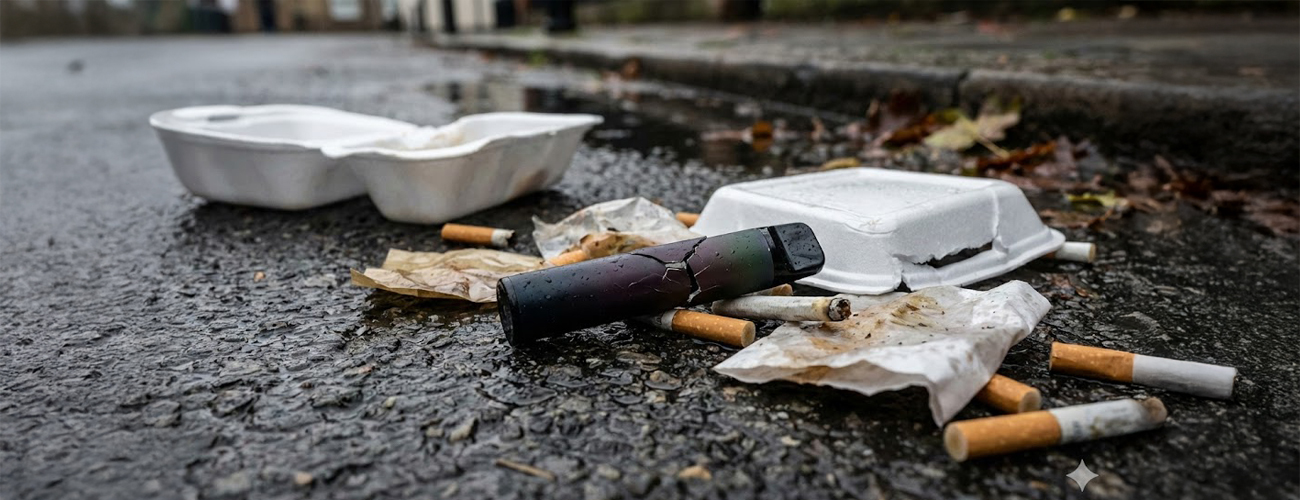
Six months after the disposable vape ban, illicit products are still widely available. Waste companies are also reporting daily fires caused by discarded vapes, casting serious doubt on whether the crackdown is working.
A return visit by LBC to Nottingham found that while fewer shops are willing to sell banned devices than on day one of the new law, illicit products remain easy to find.
Back in June, a reporter was able to buy illegal vapes in “all five shops I stopped at.” On revisiting the city, they discovered that “I visited 14 shops across Nottingham and was still able to buy four illegal disposable vapes.”
That may represent a fall in availability, but the reporter concluded the devices remain “widely available.” One shopkeeper who sold a ‘Banana Ice’ Crystal disposable vape said he “didn’t have many left” and was offering them for just £3.50.
In another store, an illegal vape was followed by an offer of an “upgrade” – “4000 for £4 to be precise” – a device containing nicotine levels that were outlawed long before this year’s ban.
Ten of the 14 retailers visited were selling only compliant products, which must be rechargeable, refillable or allow coils or pods to be replaced. But the persistent availability of illegal stock has reignited concerns over the effectiveness of enforcement, echoing long-standing warnings from harm-reduction advocates that bans tend to displace – rather than eliminate – demand.
Officials insist enforcement is tightening
A Government spokesperson insisted: “Rogue traders will face serious penalties.. Those who show a blatant disregard for the rules and reoffend face unlimited fines or jail time.” Nottingham City Council said Trading Standards “will respond to any reports of illegal vape sales.. This may include the seizure of illegal products and potentially prosecution.”
Yet even where sales have stopped, a second problem is escalating: people are still discarding vapes – including refillable models intended to replace disposables – in ordinary bins, creating dangerous fire risks across the waste-management system. Instead of changing how people vape, the ban appears to have changed where, and how, the products circulate.
Waste firms report a surge in vape-related fires
Major operators say fires linked to thrown-away vapes are now happening at the rate of more than one a day. Suez told the BBC it had recorded “339 fires across the more than 300 sites it runs this year.” The cause is the lithium batteries inside vapes, which can explode when crushed.
Adam Read of Suez said “vapes are still an all-too-common sight dumped on the street, in bins and at recycling centres across the country.” The ban, he said, “was an important first step, but the reality is it has proved to be a sticking-plaster solution.”
Biffa reported that “7,000 vapes a day” are entering its facilities, and that since the ban the number of all types of vape arriving at its sites has increased. Between April and May, four of its busiest plants handled “401,000 incorrectly discarded vapes.” By August and September that had risen to “447,000.” Thirty-one fires were recorded over the summer.
Craig Konczak of Biffa warned that “convenience culture persists – many smokers continue to discard rechargeable vapes just as quickly.”
Disposables ban not shifting behaviour
Consumers are urged to recycle vapes in store or at local recycling centres, and all UK vape retailers must offer take-back bins. But with illegal sales continuing and waste companies facing mounting fire risks, evidence is growing that the disposable-vape ban is struggling to shift the behaviours it was designed to tackle, and in some cases may be entrenching the very problems it set out to solve.