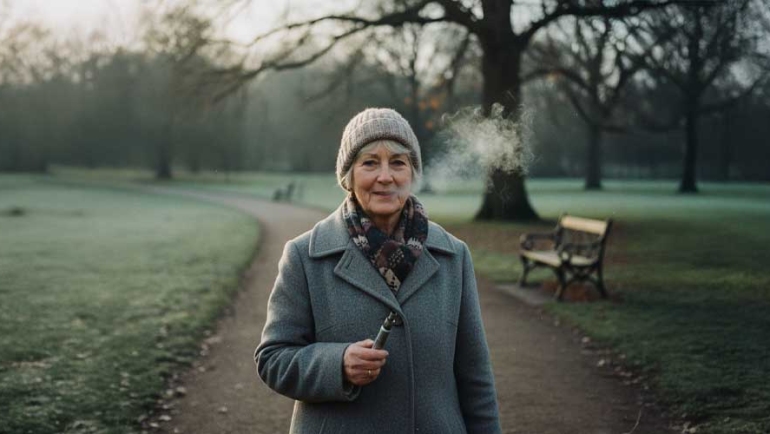
Japan has seen cigarette use fall sharply over the past decade alongside the rapid growth of heated tobacco products (HTPs) – a shift public health advocates say offers lessons for Taiwan’s smoke-free push.
In a recent post on X, Smoke Free Sweden said Japan’s smoking rates had halved since 2015, linking the decline to the rise of HTPs.
Japan’s tobacco shift
Japan has long been one of the world’s biggest tobacco markets, but smoking has been declining for more than 20 years. That trend has accelerated since the mid-2010s, when HTPs were introduced.
Government data shows that adult smoking prevalence fell to around 15 per cent in 2022 – the lowest level ever recorded. Over the same period, sales of conventional cigarettes dropped sharply, while heated products gained a growing share of the market.
Between 2018 and 2023, domestic cigarette sales fell by about one-third, according to industry and research data. Japan is now the world’s largest market for HTPs.
Unlike traditional cigarettes, heated products warm tobacco without burning it, producing fewer harmful chemicals. Supporters argue that this makes them a less harmful option for smokers who struggle to quit.
Smoke Free Sweden cited research suggesting that “if half of all cigarette smokers switched to HTPs, 12 million cases of smoking-related disease could be prevented.”
Taipei looks to Tokyo
Japan’s experience is now shaping policy discussions in Taiwan.
Taipei Mayor Chiang Wan-an has announced plans to strengthen smoke-free rules while creating designated outdoor smoking areas, drawing inspiration from Tokyo’s approach.
In Japan’s capital, smoking is largely banned on streets and in public spaces except in clearly marked zones. The system has helped reduce second-hand smoke exposure and cigarette litter in busy districts.
Chiang said Taipei will maintain existing smoke-free rules and introduce new measures before the end of the year. Surveys cited by the city show that 85 per cent of residents have encountered people smoking while walking, while 80 per cent support fixed outdoor smoking areas.
The city’s health and environmental bureaus, working with law enforcement agencies, are developing a phased rollout.
Limits of current laws
Taiwan’s Tobacco Hazards Prevention Act already bans smoking near schools and outside certain businesses, but it does not cover smoking while walking.
Enforcement is also limited. According to Lin Ching-li, director of the John Tung Foundation Tobacco Control Center, only health authorities can penalise smoking violations, while environmental agencies focus on litter.
In contrast, cities such as Hong Kong allow health, environmental, and police authorities to enforce smoke-free rules.
Lin said smoke-free policies should begin indoors, covering workplaces and public buildings, before expanding outdoors. She welcomed Taipei’s plans, saying they are likely to attract strong public support.
Policy challenges ahead
Officials acknowledge that Taipei’s high population density makes it difficult to place smoking zones without causing conflict with residents and businesses.
Finding suitable locations, ensuring compliance, and coordinating enforcement will require multiple strategies and ongoing public consultation.
The debate highlights a broader challenge facing governments worldwide: how to combine strict smoke-free rules with harm-reduction approaches that encourage smokers to quit or switch away from cigarettes.
Japan’s experience, where falling smoking rates have coincided with the rise of HTPs, offers one possible model.