


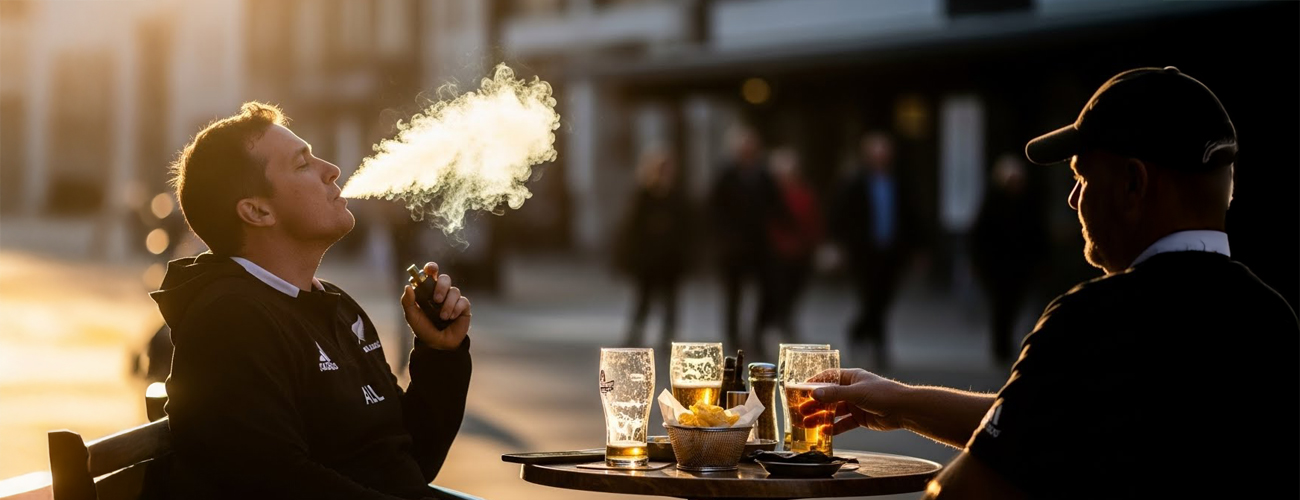
Youth vaping in New Zealand has fallen sharply, with new national data showing regular use has halved in just two years. The findings come from the latest ASH Year 10 Snapshot Survey, which polls more than 30,000 students each year.
It’s a shift public health experts say reflects the impact of targeted regulation rather than blanket bans.
The survey of more than 30,000 14 to 15-year-olds found regular vaping – once a month or more – has dropped from a 2021 peak of 20.2 percent to around half that level today. Daily use has fallen from the 2022 ‘peak vape’ high of 10.1 percent to 7.1 percent.
“Vaping is not as cool as it used to be,” said Emeritus Professor Robert Beaglehole, chair of New Zealand’s leading tobacco-control organisation. He also noted that fewer than a third of students had ever tried a vape, “which is great news”.
Targeted rules, not prohibition
New Zealand’s approach contrasts with more restrictive models overseas. Rather than banning vapes outright, the government tightened youth-specific rules from 2020 onward – including an under-18 sales ban and limits on marketing and product standards – while keeping vaping available for adults who smoke.
Beaglehole argues this balance has been crucial. “Vaping helps adult smokers quit and is much, much less harmful than smoking,” he said. He warns that excessive restrictions risk driving smokers back to cigarettes.
Experts say the latest youth data supports the idea that youth access can be controlled without removing low-harm alternatives from adults, a central pillar of the country’s harm-reduction strategy.
Youth smoking collapses
Alongside the drop in vaping, smoking among teenagers has almost vanished. Only about one percent of Year 10 students now smoke daily – a level Beaglehole describes as “negligible”.
“This is a major global success which we should be celebrating.. we are leading the way. Youth smoking has almost disappeared, and vaping continues to fall.”
Researchers note that many countries struggling with youth nicotine use have not seen equivalent declines in youth smoking, and point to New Zealand’s dual-track strategy – protecting youth, supporting smokers to quit – as a factor.
Inequities remain
Despite national gains, daily vaping among Indigenous Māori teenagers remains high at 16.5 percent. Beaglehole said more targeted action is needed to support rangatahi Māori.
Otago University associate professor Andrew Waa warns that some teenagers may be shifting to oral nicotine products instead. “Rather than talking about a smokefree future, we need to start thinking about a nicotine-free future for our young people,” he said. He describes the higher exposure among Māori and Pacific young people as “an entirely preventable inequity”.
Lessons for Europe
The youth trends come as adult smoking in New Zealand falls at one of the fastest rates seen globally, driven partly by people switching from cigarettes to vapes. Policymakers abroad have taken interest in the country’s harm-reduction framework, which seeks to limit appeal and access for youth while maintaining practical quitting tools for adults.

