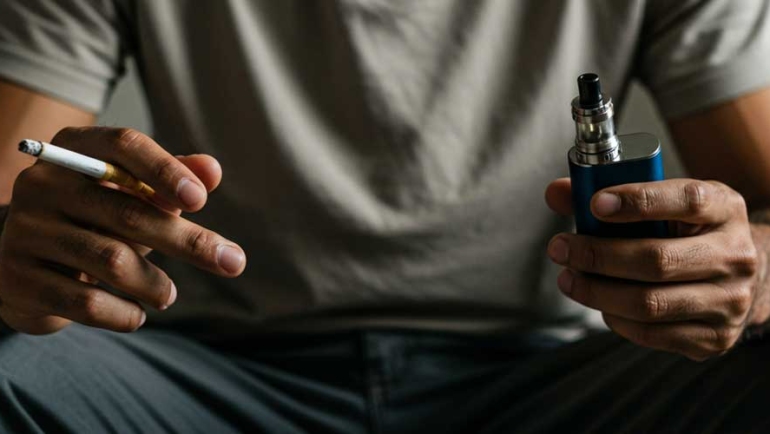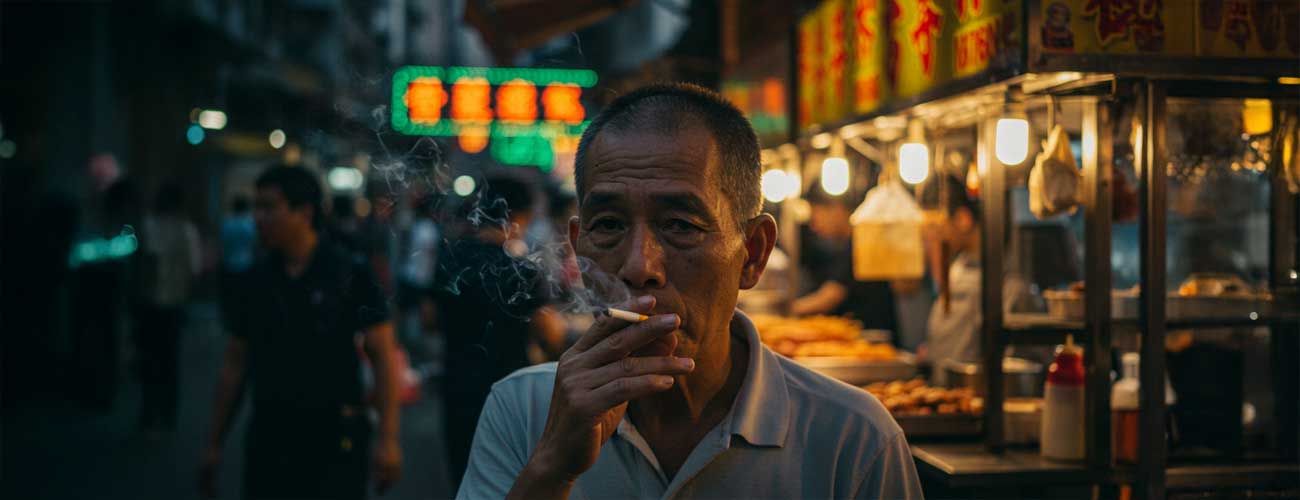
Hong Kong will ban the possession and use of vapes in public from summer 2026, a top health official has announced.
The city, a special administrative region of China, had already banned the import, manufacture and sale of vapes and heated tobacco products in 2022.
Anyone caught importing vapes can be punished by up to seven years in jail and a fine of HK$2 million (€247,000), while sellers and manufacturers can be jailed for up to six months.
However, the existing law does not cover vaping itself and it remains fairly common.
Ban to be extended to indoors
„To protect our young people, we believe it is time to ban the use of e-cigarette cartridges,“ Secretary for Health Lo Chung-mau said in a TV interview.
He added that once people have got used to an outdoor ban, it will be extended to include indoor places.
„We will start by legislating against outdoor possession and use,” Chung-mau said. “Once the public is accustomed to [the ban], we will implement it in all places.“ He said it was easiest to start with public places because there will be „many enforcement problems“ in indoor areas.
The policy, which was first proposed last year as a blanket ban on all vapes, will be sent to the legislature in April with the goal of taking effect by mid-2026.
Targeting smoking rates
Hong Kong authorities have said they hope to reduce the city’s smoking rate to 7.8 percent this year, down from 9.1 percent in 2023. However, vaping advocates and anti-smoking campaigners warn that banning vapes outdoors will put this target out of reach.
They warn it is likely to inadvertently drive smokers back to cigarettes by removing a far less harmful alternative.
Chung-mau said many of the people still vaping in Hong Kong are relying on illegal imports and that vapes have become a “tool” for recreational drug use.
Authorities have scrambled to crack down on the rising use of etomidate — an anaesthetic nicknamed „space oil“ that is often inhaled through unregulated vapes.
As part of its anti-tobacco push, the Hong Kong government is also set to propose in April banning all flavoured cigarettes (consumed by approximately 40 percent of smokers in Hong Kong) except menthol.
China’s vaping ban
In mainland China, where more than 90 per cent of the world’s vaping devices are manufactured, the sale of flavoured vapes is banned but not their export.
The ban, which came into effect in 2022, followed a tightening of other rules relating to vapes, including a ban on selling them online and an order for packaging to include warning labels that say they are harmful to health and must not be used by schoolchildren.
At the end of last year, the European Union (EU) also moved to ban vaping outdoors across the bloc.
The proposed areas for a smoking and vape ban include outdoor recreational areas where children are likely to congregate such as public playgrounds, amusement parks and swimming pools; outdoor areas connected to healthcare and education premises; public buildings; service establishments; and transport stops and stations.
‘No scientific or public health basis’ for outdoor vaping ban
The European Tobacco Harm Reduction Advocates (ETHRA), an association representing 27 million consumers of safer nicotine products, said it was “deeply disappointed” by the decision.
It provided submissions to a consultation pointing out that the purpose of the ‘Recommendation on Smoke-Free Environments’ is to protect people in the EU from exposure to second-hand smoke, as well as to encourage current smokers to quit.
It said that since second-hand vape aerosol is of negligible risk to bystanders, as proven by research from the Royal College of Physicians and Public Health England, there is no scientific or public health basis to extend the recommendation to include vapes.