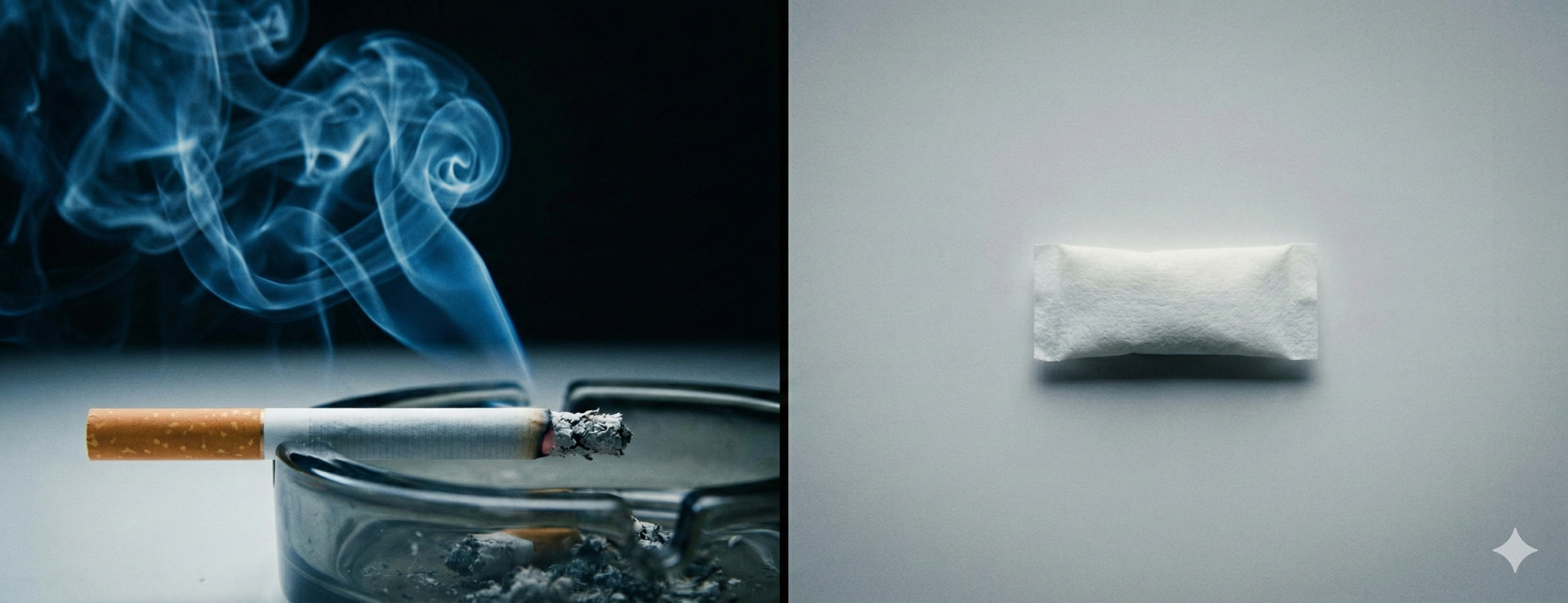

- Biomarker studies show smokers who switch to nicotine pouches see toxic exposure fall by 42-96%, similar to quitting altogether.
- Cancer-linked compounds such as tobacco-specific nitrosamines are “undetectable or present at negligible amounts” in pouches.
- Exclusive pouch users had 91% lower levels of a key lung cancer biomarker compared to smokers.
- Evidence from Swedish snus suggests similar oral products are not linked to lung cancer or major cardiovascular disease.
Smokers who switch to nicotine pouches can slash their exposure to some of the most dangerous chemicals found in cigarettes to levels close to those seen after complete cessation, according to a major new review.
The paper, published in Internal and Emergency Medicine, concludes that nicotine pouches sit at the “lowest end of the toxicant risk continuum” among nicotine products and could represent a significant harm reduction opportunity for people who cannot or will not quit nicotine entirely.
Toxic exposure collapses after switching
The review, by Konstantinos Farsalinos of the University of West Attica and the University of Patras in Greece, pulls together data on chemistry, toxicology, biomarkers and population trends.
One of the strongest findings comes from biomarker studies, which measure the chemicals absorbed into the body.
Exclusive nicotine pouch users showed 91 per cent lower levels of total NNAL – a key biomarker of exposure to tobacco-specific nitrosamines linked to cancer – compared with cigarette smokers. Their levels were similar to former smokers not using any nicotine product.
Markers of exposure to acrolein, benzene and 1,3-butadiene – all major toxicants in cigarette smoke – were also cut dramatically, by 78.8 per cent, 97.2 per cent and 93.5 per cent respectively.
In a randomised controlled trial of smokers who switched to pouches, 18 out of 19 measured biomarkers of exposure were significantly lower after just seven days compared to continued smoking. Reductions were “comparable to complete tobacco cessation”.
Carboxyhemoglobin – a marker of carbon monoxide exposure – was 46 per cent lower in pouch users, while white blood cell count, a marker of inflammation, was 19 per cent lower.
What’s in a pouch?
Nicotine pouches are tobacco-free products placed under the upper lip. Unlike snus, they contain no tobacco leaf. Instead, they use pharmaceutical-grade nicotine combined with fillers, sweeteners and flavourings.
Chemical analyses show that most harmful and potentially harmful constituents found in cigarette smoke are either absent or present at extremely low levels.
Crucially, tobacco-specific nitrosamines (TSNAs) – potent carcinogens abundant in cured tobacco – are “either undetectable or present at negligible amounts” in nicotine pouches. Even when trace levels were detected, they were far lower than those found in cigarettes or snus.
Lab studies showed minimal cell toxicity or genetic damage compared with cigarette smoke. Taken together, the evidence places pouches alongside – or close to – pharmaceutical nicotine replacement therapies in terms of toxic risk.
Bridging from Swedish snus
Because nicotine pouches are relatively new, there are no long-term epidemiological studies yet tracking disease outcomes. Instead, the review uses a “bridging” argument based on decades of research into Swedish snus.
Snus is an oral tobacco product placed under the lip, similar in use but containing tobacco. Large observational studies have consistently found that snus use is not associated with lung cancer or chronic obstructive pulmonary disease. Studies have also failed to identify any association between snus use and acute myocardial infarction.
Given that nicotine pouches eliminate tobacco leaf and its associated impurities, the review argues it is scientifically plausible they would carry “an equivalent, or, more likely, a lower risk” than snus.
Can pouches help smokers quit?
The review notes that large-scale cessation trials are still limited. However, pharmacokinetic studies show modern pouches can deliver nicotine at levels that match or exceed cigarettes in peak concentration, albeit more slowly.
This slower delivery means they lack the rapid “hit” of smoking, but they appear more satisfying than traditional nicotine gum and similar in nicotine delivery to snus.
Population data from Sweden suggest oral nicotine products act as an “exit” from smoking rather than a gateway to it. In one large analysis, people who began daily tobacco use with snus were much less likely to subsequently take up smoking than those who had not.
Not risk-free
The review stresses that nicotine pouches are not harmless. Some users reported mouth irritation, particularly with higher nicotine strengths. There are also concerns about unclear labelling, very high-dose products and certain flavouring additives exceeding recommended safety levels.
The author argues that clearer labelling, limits on nicotine content and proper enforcement of age-of-sale laws are needed.
However, when it comes to toxic exposure, the data points in the same direction. Because nicotine pouches do not involve burning tobacco – the source of most harmful chemicals in cigarette smoke – they expose users to far lower levels of many dangerous substances. In several studies, reductions were similar to those seen in people who quit smoking.
For smokers who cannot or do not want to give up nicotine entirely, switching to pouches would likely mean substantially lower exposure to harmful chemicals than continuing to smoke.