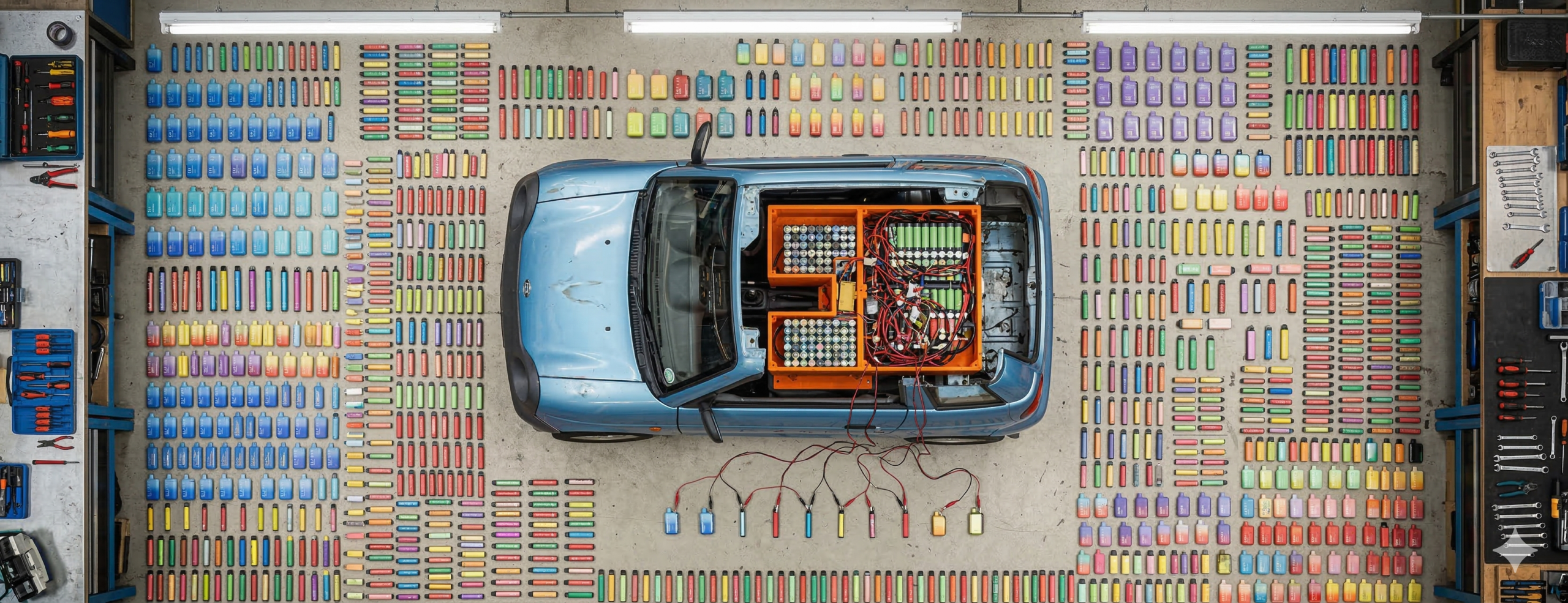
A UK engineer and YouTuber has powered a small electric car using a battery pack made from hundreds of discarded vape batteries, highlighting the hidden energy still left inside many disposable devices.
Chris Doel, a 27-year-old software and electronics engineer at Jaguar Land Rover, dismantled lithium batteries from around 500 disposable vapes and used them to power a 2007 G-Wiz micro-electric car.
The unusual project, which he documented on his YouTube channel, allowed the tiny vehicle to reach a top speed of almost 40mph and travel roughly 18 miles on a single charge.
Turning discarded vapes into a power source
Disposable vapes contain lithium batteries that are often discarded while still capable of storing energy. Doel saw an opportunity to reuse them rather than sourcing expensive automotive-grade cells.
He collected returned devices from a local vape shop and spent months extracting the rechargeable lithium batteries from them.
To power the vehicle, Doel constructed a large battery pack using 500 lithium cells taken from the vapes. The batteries were placed inside a 3D-printed casing and connected in parallel groups wired in series to generate the voltage required to run the vehicle. Because the cells came from different devices, each one had to be tested individually before being installed.
Doel also built a custom battery management system to regulate charging and ensure the cells discharged evenly.
Choosing the right car
Most modern electric vehicles run on battery systems of around 400 volts, making them unsuitable for a project based on salvaged vape batteries. The G-Wiz, however, uses a much smaller 48-volt battery system.
Doel said: “My colleague came up with the genius idea of using the G-Wiz. It’s pretty much the only car out there with a 48v battery – so it meant the power-wall would work with it.”
The microcar – once labelled the worst car of the year by Top Gear – proved ideal because of its relatively low power requirements.
Doel bought the vehicle for £800 from a dealer north of London and spent about five months rewiring and rebuilding it before taking it for a test drive.
Testing the vape-powered vehicle
During testing, the modified car managed around two hours of driving and travelled roughly 18 miles before the battery ran out. The vehicle reached speeds close to 40mph, making it capable of city driving, although hills pushed the system close to its limits.
Before installing the pack in the car, Doel had also tested it as a household energy system and was able to power his home for eight hours.
The unusual experiment demonstrated how much usable energy can remain inside devices that are routinely discarded – and how that energy can be repurposed instead of wasted.