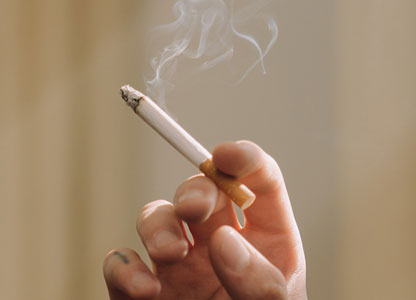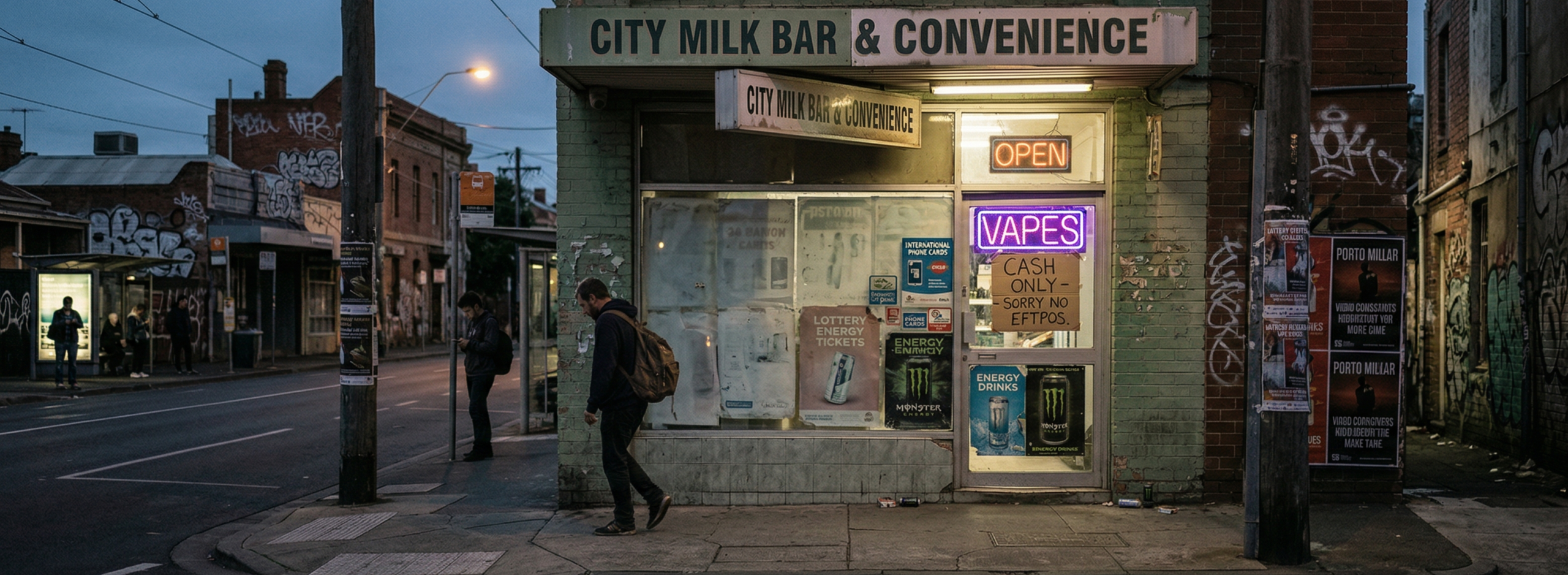
Australia’s government is preparing a major crackdown on the illicit trade in tobacco and vapes, as officials warn the problem has escalated into a serious organised crime issue.
Assistant Minister for Customs Julian Hill is expected to outline plans to give investigators stronger powers, including wire taps and expanded asset seizures, targeting criminal networks behind the trade.
The changes aim to hit crime groups “where it hurts” by stripping profits and making illegal sales far riskier. Penalties could increase by up to two or three times current jail terms, with tobacco offences reclassified as “serious crimes”.
This would allow authorities to seize assets such as cars, boats and houses linked to “unexplained wealth”.
The crackdown comes as Australia restricts legal vape sales to pharmacies, a system that has proved difficult to access in practice. With a limited number of pharmacies participating, research suggests demand has shifted toward illegal and unregulated supply channels.
‘Massive problem’ driven by organised crime
Hill warned that Australia is facing a “massive problem” with illicit tobacco, adding that anyone who denied it was “either deluded or lying”.
“Cheap smokes are everywhere with a now ridiculously ubiquitous retail distribution network,” he said. “What used to be seen as a health revenue issue, has now morphed into a serious and organised crime crisis.”
According to official estimates, more than half of all tobacco sold in Australia is now illegal. Around 95.7 per cent of vape products are also thought to be illicit, with a market value of about $1.6 billion (around €1.4 billion).
Authorities estimate organised crime groups made between $4.1 billion (around €3.5 billion) and $6.9 billion (€5.9 billion) in profit from the trade in a single financial year.
Hill said the illegal market is fuelling violence, harming legitimate businesses and risking progress in reducing smoking rates.
“The explosion of this illegal trade has normalised law-breaking for a significant proportion of Australians,” he said.
Focus on shops, online sales and new products
The crackdown will target large-scale shipments linked to organised crime, as well as illegal retail outlets. States and territories are being urged to shut down unlawful shopfronts, penalise landlords and increase “street level enforcement”.
Authorities are also turning their attention to online sales and the growing market for nicotine pouches, described by Hill as “disgusting”. “We are actively pursuing options to respond to this growing threat, including reform of product regulation,” he said.
Hill said meaningful progress would mean fewer illegal shops, less violence and rising prices for illicit products.
“Progress will not be smooth or linear,” he said. “In some places, things may get worse before they get better.”
Tax debate continues
The surge in illegal sales has also reignited debate over tobacco taxes. The government estimates it has lost between $7.7 billion (around €6.6 billion) and $11.8 billion (around €10.1 billion) in excise revenue due to the black market.
Hill acknowledged that high excise has been “one of the key drivers of growth in the black market”, but argued cutting taxes now would not solve the problem.
“As of now, based on the information available and advice to government, there is no reasonable level of excise reduction that would make any material difference to the ubiquitous illicit supply chains and distribution networks operated by serious and organised crime,” he said.
He added that while price may push some consumers towards illegal products, it remains “the single most effective lever” to encourage people to quit smoking.
Calls for harm reduction alongside enforcement
Not everyone agrees enforcement alone will fix the issue. Former Australian Border Force officer Rohan Pike said stronger penalties would be “welcome” if “enforced rigorously and in a sustained way”, but warned they should not be the only solution.
“But putting that as the one and only solution is misplaced,” he said.
Pike argued that high taxes create an “imbalance in the market” and said: “The excise needs to be reviewed; it needs to be adjusted to reduce the incentive for criminals to step into the market.”
He also called for a harm reduction approach alongside enforcement, including legalising and regulating alternative nicotine products.
“We need harm minimisation in concert with enforcement measures,” he said.
Political pressure mounts
The government is also facing political pressure over its handling of the issue.
Shadow Home Affairs Minister Jonno Duniam criticised the current approach as “all talk and no action”.
“The Albanese government has lost control of the illicit tobacco market, allowing organised crime to grow while also costing the budget billions in lost revenue,” he said.
New legislation outlining tougher laws is expected to be introduced when parliament returns, as authorities step up efforts to regain control of a rapidly expanding illicit market.