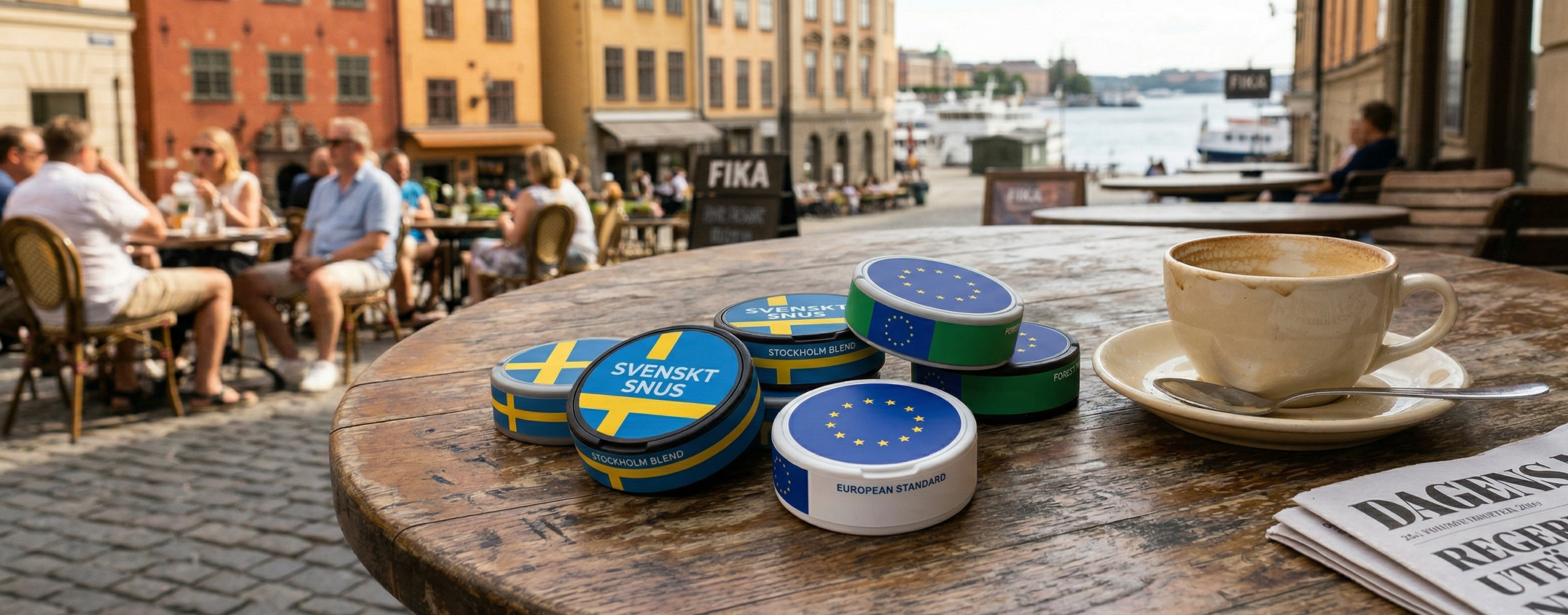
A Swedish member of the European Parliament has urged the European Commission not to weaken access to safer nicotine alternatives, as debate grows over future EU rules on tobacco and nicotine products.
Jessica Polfjärd (EPP, Sweden) has submitted a formal written question to the Commission asking how it will ensure that upcoming revisions to the Tobacco Products Directive do not restrict Sweden’s long-standing approach to reducing smoking.
Her intervention comes as the EU considers changes that could affect products such as nicotine pouches and other smoke-free alternatives.
Sweden’s approach under scrutiny
Sweden has a unique position within the EU, with a long-standing exemption allowing the sale of snus. Polfjärd highlighted that this exemption formed part of Sweden’s EU accession agreement and has played a role in the country’s efforts to reduce smoking.
She also pointed to the emergence of nicotine pouches as a tobacco-free development of traditional snus, raising questions about how future regulation could impact their availability.
The move reflects wider concerns that changes at EU level could affect national approaches to tobacco harm reduction.
Falling smoking rates
Sweden has reduced adult smoking prevalence to just above the ‘smoke-free’ threshold of five per cent, one of the lowest rates in Europe.
Advocates of the Swedish model argue this progress has been driven by giving smokers access to alternatives to cigarettes.
Dr Delon Human, leader of Smoke Free Sweden, said: “Sweden’s harm-reduction model has helped bring smoking rates down to the lowest level in Europe and has produced the lowest levels of tobacco-related disease on the continent.”
He added: “For decades Sweden has shown that when smokers are offered practical alternatives such as snus, many of them switch.”
Debate over EU regulation
Polfjärd’s question to the Commission asks how it will ensure that new EU rules do not undermine Sweden’s model or the spirit of its exemption. Dr Human warned that future policy should take account of differences in risk between products.
“Policies that fail to recognise the vast difference in risk between cigarettes and smoke-free alternatives will slow progress against smoking,” he said.
“The Swedish model proves that harm reduction works, and it should be protected.”
The debate comes amid wider concern over EU plans to increase taxes on safer nicotine products, including vapes and nicotine pouches.
Earlier this year, consumer groups warned that proposed changes to the Tobacco Excise Directive could significantly raise prices for these products across the bloc, bringing them closer in line with cigarettes.
In an open letter to the Swedish government, organisations representing users of safer alternatives argued the proposals risk undermining harm reduction efforts.
They warned that higher taxes on lower-risk products could reduce incentives for smokers to switch, and potentially drive consumers toward illicit markets rather than regulated alternatives.