
- A new report linked to the International Monetary Fund (IMF) says taxes on nicotine products should reflect their relative health risks.
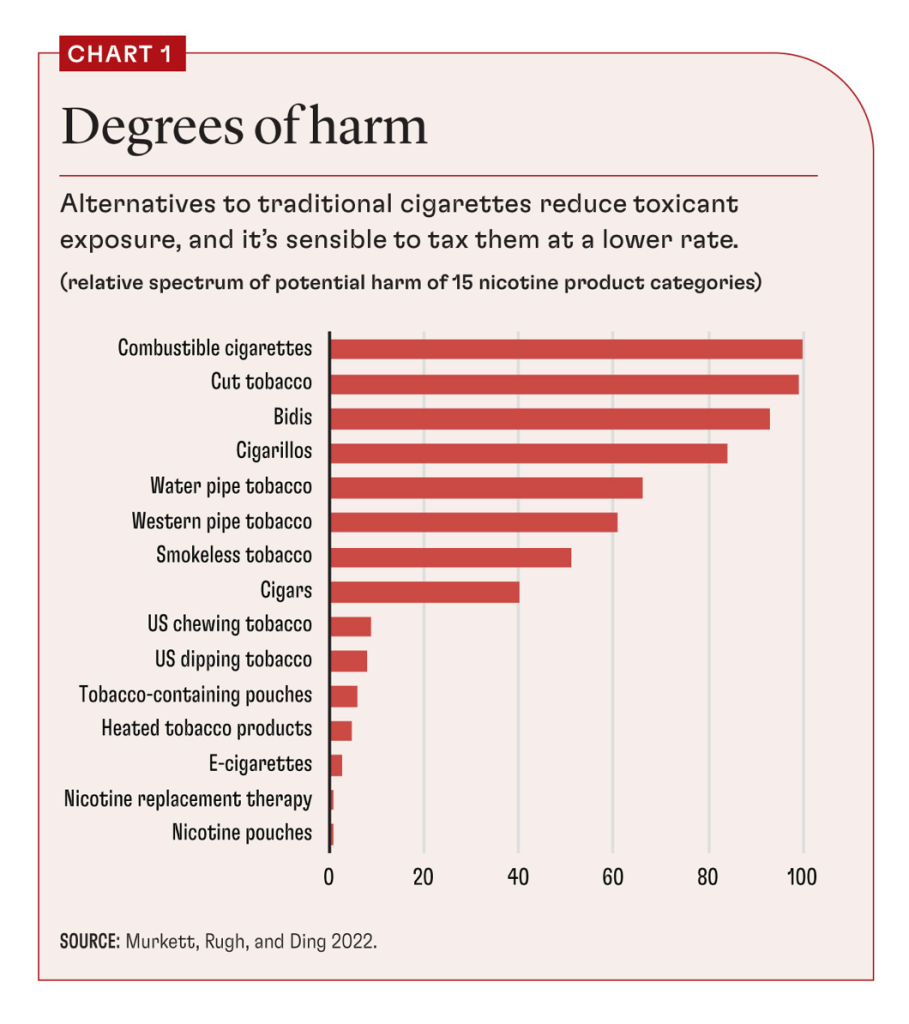
- The authors say many newer nicotine products “reduce exposure to toxicants” compared with cigarettes.
- They state it “makes sense to tax them at a lower rate”.
- The paper argues that tax systems should better align with evidence about the harms of different products.
A report published by the International Monetary Fund (IMF) says governments should tax nicotine products according to the harm they cause, with lower tax rates for alternatives that expose users to fewer toxic substances.
The paper, published in the IMF’s Finance & Development magazine and written by economist Christoph B. Rosenberg and tax policy expert Marius van Oordt, examines how taxes on products such as tobacco, alcohol and sugary drinks could be structured to better reflect health risks.
It argues that governments should “align tax rates with the potential harm to health” when designing excise taxes on so-called harmful products.
Aligning taxes with health risks
Excise taxes on products such as tobacco, alcohol and sugary drinks are widely used by governments both to raise revenue and to influence behaviour.
The report notes that such taxes generate significant income for governments, producing on average “about 2 percent of GDP in both advanced and developing economies.”
However, it says tax systems do not always reflect the differences in health risks between products.
The authors argue that policymakers should consider both the substances contained in a product and how they are consumed when setting tax rates.
The harm associated with a product depends partly on its ingredients and partly on “its mode of administration (such as burning versus heating tobacco)”.
New nicotine products
The report says the nicotine market has changed significantly in recent years as new alternatives to cigarettes have become more widely available. It notes that “alternatives to traditional cigarettes – from e-cigarettes to heated tobacco products to nicotine pouches – cater to those who can’t kick the habit.”
While the paper states that these products are still harmful, it also notes that research suggests they can expose users to fewer toxic substances than cigarettes. “The good news is that many of these new products, while still harmful, reduce exposure to toxicants,” it says.
Because of this difference, the authors say governments should consider setting lower tax rates for these products than for combustible cigarettes.
“It therefore makes sense to tax them at a lower rate.”
Example of tax policy
The report highlights New Zealand as an example of how tax policy can differentiate between nicotine products. It says successive governments have increased excise rates on combustible tobacco products while maintaining lower tax rates on alternatives.
Over the past 15 years, the proportion of people smoking cigarettes in the country fell from 18 percent in 2012 to 8 percent in 2024. During the same period, the uptake of vapes increased from near zero to 14 percent.
The authors state that “causality is hard to establish” but say it “seems plausible that rising price differentials in part caused this shift.”
Tax systems still inconsistent
Despite these developments, the report says tax structures in many countries remain inconsistent across different types of products. It says misaligned tax systems can create unintended incentives and encourage consumption of products associated with higher risks.
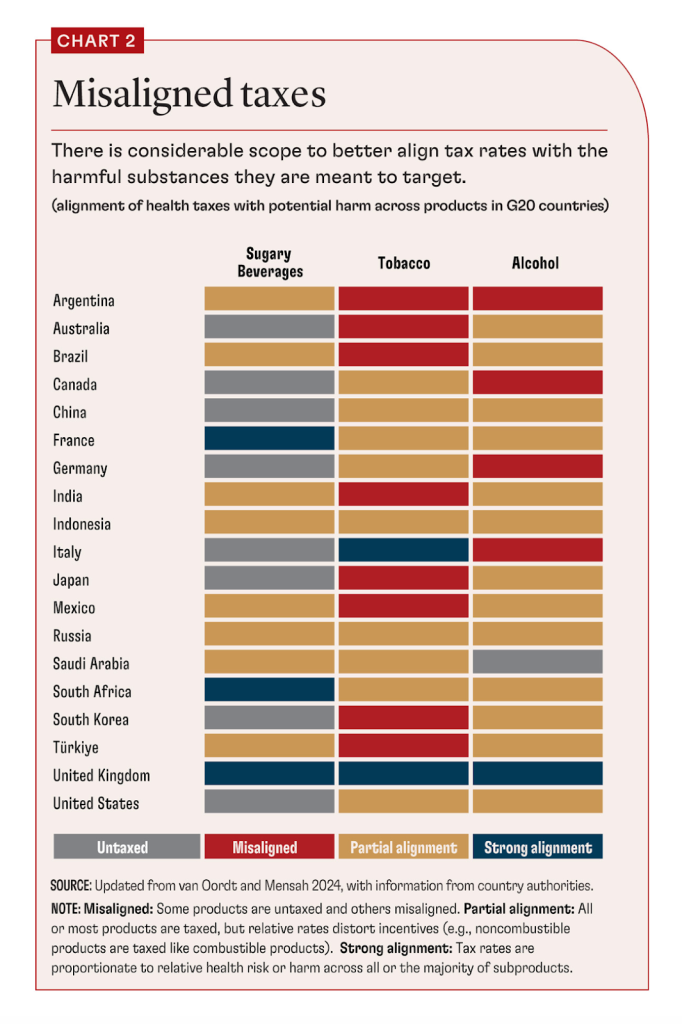
“Such misalignment falsely signals lower health risks, sustains consumption in often more dangerous products, and diverts investment toward the wrong industries.”
The authors conclude that taxation policies should evolve alongside changes in consumer behaviour and new products entering the market. “Taxation is more than a fiscal instrument; it is a powerful lever for shaping healthier societies,” they write.
They say linking excise taxes to relative health risks could help reduce preventable diseases while maintaining government revenues.
ends