
On the surface, the UK’s disposable vape ban appears to have worked.
Among 11 to 17-year-olds who vape, the share saying they mainly use disposables has fallen from 42 per cent in 2025 to 13 per cent in 2026, according to YouGov data published by Action on Smoking and Health. Among adults who vape, the figure has dropped from 24 per cent to eight per cent.
That is a significant change. But it doesn’t prove that youth vaping has fallen by the same amount, that illegal sales have been cut off, or that cheap disposable-style nicotine products have disappeared.
The first year of the ban tells a far messier story. The legal market has moved quickly. So, according to the data, have illegal and harder-to-police routes, including hidden stock, online sellers, social media, local delivery and informal supply networks.
More than 1.3 million illegal vape-related products were seized by UK councils in 2025, according to a Freedom of Information analysis by Vape Superstore. Material Focus says 6.3 million vapes and pods are still being thrown away every week. In Wales, reports of illegal tobacco and vape sales rose tenfold in May 2026 compared with the same month a year earlier.
The ban has changed what can be sold openly, but it hasn’t yet shown that it has removed demand.
What the ban actually did
From 1 June 2025, it became illegal across the UK to sell, supply, offer to sell or stock for sale a single-use vape, whether or not it contains nicotine.
To remain legal, a vape has to be genuinely reusable. According to GOV.UK guidance for businesses, that means it must have a rechargeable battery, a refillable container and, where relevant, a removable and replaceable coil. Refills, pods or coils must also be separately available.
That definition gave the market room to adapt. Rechargeable, refillable and high-puff products can still be sold legally, provided they meet the rules. Some look and feel very similar to the devices the ban was meant to remove. They can still be brightly branded, cheap and treated by users as throwaway products.
That’s why the first-year data needs careful handling. ASH’s figures show a major fall in the proportion of people who vape saying disposables are their main product. But they don’t show whether young people have stopped vaping, where they now get products, or whether some have switched to rechargeable disposable-style devices.
ASH’s youth vaping facts page describes youth vaping in Great Britain in 2025 as having levelled off at around seven per cent current use among 11 to 17-year-olds, with around 20 per cent having ever vaped. There isn’t yet a directly comparable published post-ban 2026 prevalence series showing that overall youth vaping has fallen by anything like the same amount as disposable use.
The safest conclusion is that the ban has driven substantial product switching. It hasn’t yet proved a comparable fall in youth vaping itself.
The waste problem has shrunk, not disappeared
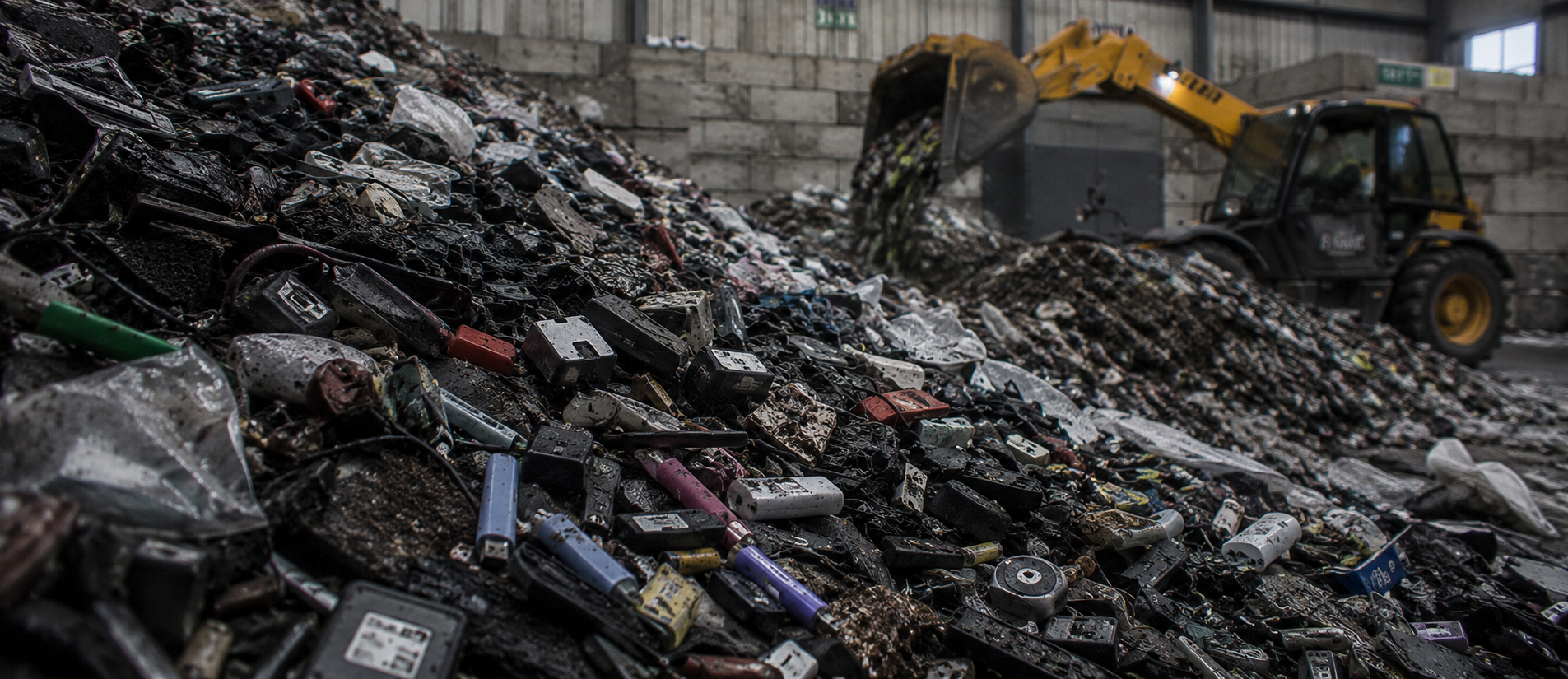
The environmental case for the ban was strong. Disposable vapes contain lithium batteries, plastics, metals and electronic components. When they’re thrown into household bins or mixed recycling, they can cause fires and waste valuable materials.
Material Focus says weekly purchases of all vape products and pods fell from 13.5 million in 2024 to 9.4 million in early 2026, a 31 per cent reduction. Weekly discarded vapes and pods fell from 8.2 million to 6.3 million.
That is progress, but it still leaves millions of devices entering the waste stream every week.
The same research found that 2.2 million single-use vapes were still being bought each week after the ban. Material Focus says this could reflect illegal sales, or confusion among consumers about whether products are genuinely reusable.
A survey of 1,000 adults who recently bought vapes found that 47 per cent didn’t know vapes could be recycled. Among those who tried to recycle them, 43 per cent said they couldn’t find a collection point at a supermarket, 63 per cent couldn’t find one at a local convenience store and 33 per cent couldn’t find one at a specialist vape retailer.
Scott Butler, executive director of Material Focus, said: “Vapes are among the most environmentally wasteful, damaging and dangerous consumer products ever sold.
“The ban on disposables was a major step, but banning one type of vape is not, on its own, a behaviour-change strategy.”
Waste firms are still dealing with the consequences. Biffa has reported receiving more than 200,000 vapes every month that have been incorrectly placed in mixed recycling collections. Veolia has reported continuing fires in vehicles and at waste and recycling facilities, with lithium batteries in discarded devices among the suspected causes.
Illegal supply remains a national enforcement problem
The best official seizure data still predates the ban, but it shows the scale of the market into which the new law arrived.
National Trading Standards reported that Trading Standards services in England seized 1,195,579 illicit vapes in 2023-24, up 59 per cent on the previous year. Wales seized 376,406, up 30 per cent.
Targeted underage test purchasing also showed persistent illegal sales. In England, Trading Standards carried out 3,354 targeted underage test purchases of vapes in 2023-24, with a 26 per cent failure rate. In Wales, the failure rate was 14.1 per cent.
The strongest post-ban UK-wide seizure snapshot now available comes from FOI data analysed by Vape Superstore. It found that UK councils seized 1,318,389 illegal vapes and e-liquids in calendar year 2025, along with 16,635 illegal nicotine pouches, across 3,494 premises. The same analysis recorded 174 fines worth £164,012.
Because this is FOI-based and depends on local authority responses and counting methods, it shouldn’t be treated as an official national total. But it does suggest illegal supply remained extensive in the first post-ban year.
Local enforcement cases show how the trade operates. In Hounslow, Trading Standards and the Metropolitan Police seized 4,859 illegal vapes from 16 premises in October 2025, alongside illegal cigarettes, shisha and chewing tobacco. The council said the vapes breached legal tank-size and nicotine-strength limits or were unregistered for sale in the UK.
Suffolk County Council also secured a three-month closure order against a Stowmarket store after repeated seizures and test purchases involving illegal tobacco and vapes.
This isn’t a handful of rogue products. It is a market that enforcement teams were already struggling to contain before the ban, now adapting to tighter rules.
Wales shows how sales can move out of sight
Some of the clearest post-ban evidence comes from Wales. ASH Wales says reports to No Ifs. No Butts., its anonymous reporting route for illegal tobacco, illegal vapes, online sellers and underage sales, rose from 15 in May 2025 to 150 in May 2026.
That is a tenfold rise in the same month year on year. It was also the highest monthly total recorded since the service began, equal to almost one report every five hours.
The reports included illegal vapes, cheap tobacco, hidden stock, online sellers, local delivery and products being sold to young people. More than one in three reports in May 2026 raised concerns about underage sales or young people being linked to illegal tobacco or vape sales.
Reports mentioning online sellers were already 175 per cent higher than the whole of the previous year. Around one in five reports mentioned products being hidden or kept out of sight.
This doesn’t prove that illegal trade itself rose tenfold. ASH Wales says awareness of the reporting route has also grown. But it is strong evidence that public concern and enforcement intelligence have intensified since the ban.
Suzanne Cass, chief executive of ASH Wales, said: “The disposable vape ban was an important step, and it is positive to see survey data suggesting fewer people are now mainly using disposable vapes. But that does not mean the wider problem has disappeared.
“The market has changed very quickly. Products that were once single use have been replaced by larger rechargeable devices, high puff products and disposable style alternatives, often sold at similar prices and still treated like throwaway products.
“The products have changed, but the problem has not gone away.”
ASH Wales also surveyed 80 frontline professionals, including enforcement officers, youth workers, police officers, public health professionals and community safety practitioners. Almost two thirds said the situation relating to illegal tobacco and vaping products had worsened over the previous 12 months.
The harm reduction trade-off
The ban sits inside a difficult public health balance.
Youth vaping and vape waste required intervention. But vaping remains far less harmful than smoking, and evidence reviews continue to support nicotine vapes as an effective quitting aid for adult smokers.
The Office for Health Improvement and Disparities evidence update concluded that vaping poses only a small fraction of the risks of smoking in the short and medium term. A 2025 Cochrane review found that people are more likely to stop smoking for at least six months using nicotine vapes than using nicotine replacement therapy or nicotine-free vapes.
If restrictions make lower-risk products harder to access for adult smokers, while illegal products remain easy to find, some people may move in the wrong direction.
ASH’s first-year survey found that among adults who mainly used disposables just before the ban, 70 per cent said the law change had no effect on their smoking. But 13 per cent said it increased their smoking. ASH notes that this was a subgroup of 437 adults, so it should be treated as a warning signal rather than proof of a population-wide rise in smoking caused by the ban.
The concern will grow when the new Vaping Products Duty starts on 1 October 2026. HMRC says the duty will be charged at £2.20 per 10ml of vape liquid, with a vaping duty stamps scheme also being introduced.
The government says the aim is to reduce affordability for young people and non-smokers while maintaining a financial incentive for smokers to switch away from cigarettes, with tobacco duty rising at the same time.
That may be coherent on paper, but it will also make enforcement more important. A more tightly regulated and more heavily taxed vape market could widen the price gap between legal and illegal products if rogue sellers aren’t tackled.
The tobacco market offers a warning. HMRC estimates the tobacco duty gap at £1.4 billion in 2023-24, plus a tobacco VAT gap of about £0.4 billion. Even using official figures, the lesson is clear enough. Reducing legal availability or raising price doesn’t remove demand by itself. Without sustained enforcement, criminal supply can fill the space.
Enforcement is now the real test
The Tobacco and Vapes Bill received Royal Assent on 29 April 2026, giving ministers wider powers over packaging, flavours, displays, advertising and retail licensing. In May, the Home Office and National Crime Agency announced a new High Street Organised Crime Unit backed by £30 million over three years. In June, the Home Office announced plans to extend closure orders for rogue premises to up to 12 months.
Those moves follow growing concern that some shops selling illegal tobacco and vapes are linked to wider organised crime. A 2025 Chartered Trading Standards Institute survey found that 96 per cent of Trading Standards professionals had encountered serious organised crime or organised crime groups in their duties, while 97 per cent were aware of suspected organised-crime-linked retail premises on local high streets.
But enforcement capacity remains a weak point. The National Audit Office has previously reported that local Trading Standards services in England lost 56 per cent of full-time equivalent staff between 2009 and 2023. CTSI has warned that local authority Trading Standards budgets have fallen sharply over the past decade.
In reality, the state is asking local enforcement teams to police a nicotine market that is more online, more mobile and more adaptable, after years of depleted capacity.
What we still don’t know
Britain’s disposable vape ban has changed the legal market. It has pushed many users away from the banned format. It has reduced vape waste, but not ended it. It hasn’t yet proved that youth vaping has fallen in line with disposable use. And it has landed in a market where illegal products, hidden stock, underage sales and online routes were already significant enforcement problems.
A ban can remove a product from legal shelves. It can’t, on its own, police social media sellers, back-room stock, illegal imports or informal supply.
The harder task now is targeted enforcement, clear retail licensing, visible recycling obligations and regulation that keeps lower-risk products available to adult smokers while cutting off youth access.
Without that, Britain may end up with a smaller legal vape market and a more resilient illegal one.