
The European Commission has approved Poland’s plan to ban disposable nicotine vapes, accepting its argument that existing restrictions have failed to keep the products out of children’s hands.
The decision, adopted on 14 September, clears an EU hurdle for the proposed ban. There is not yet a set date for the products to be removed from sale.
Brussels concluded that the measure was “justified, necessary and proportionate” to protecting public health, citing youth vaping, rapid growth in the disposable market and the waste generated by single-use devices.
Refillable vapes and devices using replaceable cartridges fall outside the disposable category covered by the decision.
What has Brussels approved?
Poland’s wider proposal would prohibit the sale of disposable vapes both with and without nicotine. However, this Commission decision covers only nicotine-containing products, which fall within the EU Tobacco Products Directive.
The nicotine-free provisions were notified under a separate EU procedure for technical regulations.
Poland submitted its nicotine vape ban for approval on 3 April. The Commission requested further evidence in June, with Polish authorities supplying additional information in July.
The decision, signed by health commissioner Olivér Várhelyi, accepts that the ban meets the requirements allowing a member state to prohibit a category of tobacco or related products on public health grounds.
Youth use and failures to enforce existing rules
Polish authorities pointed to a 2024 school survey in which 37.2 per cent of 15- and 16-year-olds reported using an vape in the previous 30 days. Among 17- and 18-year-olds, the figure was 50.9 per cent.
Those figures cover vapes generally. The authorities also submitted evidence that disposables appeal to young people because they are easy to use, come in attractive designs and require little initial spending.
Sales reported by manufacturers and importers rose from 52,000 disposable devices in 2016 to more than 60 million in 2024, according to the Polish submission.
Inspections also exposed widespread breaches of existing product rules. Of 772 disposable vape samples checked in 2025, just 126, or 16 per cent, complied with the requirement that tank capacity must not exceed 2ml.
The Commission acknowledged “the significant difficulties that Poland encounters in the enforcement of the ban on sales to minors”.
Polish authorities argued that under-18s could still obtain vapes through adults and informal channels, despite restrictions on sales, advertising and vending machines. The Commission accepted that less restrictive measures would not achieve the same level of protection as effectively or quickly.
Reusable vapes remain outside the ban
The Commission’s assessment places considerable weight on preventing nicotine use among young people. It also records Poland’s reliance on the World Health Organisation’s position that vapes have not been proven effective for smoking cessation at population level.
There is evidence that nicotine vapes can help individual smokers quit. Cochrane’s current review finds high-certainty evidence that they increase quit rates compared with nicotine replacement therapy, such as patches and gum.
The Commission explicitly took account of the ban’s limited scope, describing it as less restrictive than prohibiting all nicotine vapes, including reusable products.
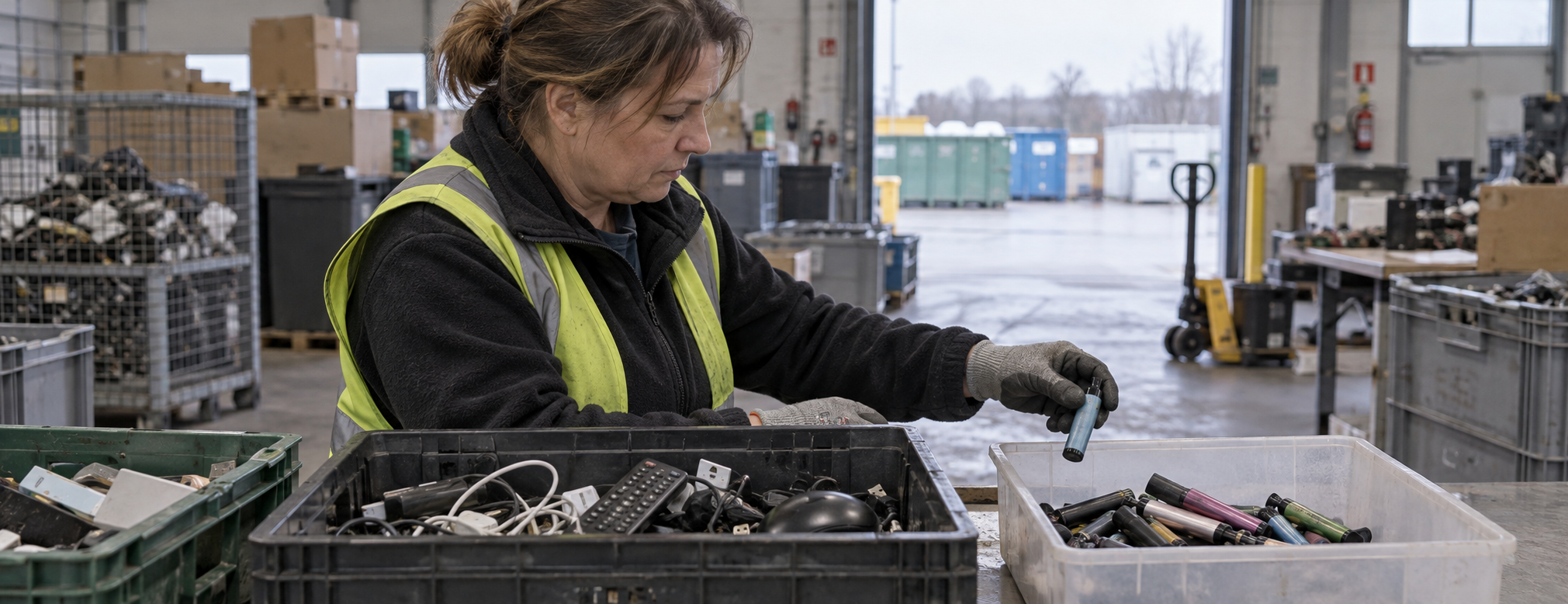
Environmental concerns provided another justification. The decision highlights the plastic, batteries and chemical waste discarded after each disposable device is used up.
Polish authorities argued that removing the products from the market would tackle that waste at source, reducing reliance on collection and recycling systems they regard as inadequate.